Complete Guide to Fabrication vs Installation of Structural Steel
Professional Steel Structure Solutions with Global Service

Welcome to our blog. We are a professional manufacturer specializing in structural steel fabrication, providing reliable solutions for industrial buildings, commercial projects, and modular construction worldwide.
👉 Follow us on Facebook for the latest updates and project insights.
👉 Contact us for fast quotations and customized structural steel solutions.
Stay tuned to our blog for more industry insights and engineering expertise.
Introduction
Modern construction is undergoing a rapid transformation driven by precision engineering, modular construction, and digital design systems. In this evolving landscape, understanding fabrication vs installation of structural steel is no longer optional—it is a core requirement for cost control, structural safety, and project efficiency.
Across commercial buildings, industrial plants, bridges, and infrastructure projects, steel remains the backbone material due to its strength-to-weight ratio, scalability, and durability. However, project success depends heavily on how well fabrication and installation are planned and executed together.
This guide provides a deep, structured, and data-backed breakdown of both processes, supported by industry standards, real-world workflows, performance comparisons, and engineering insights.
Key Takeaways
- Clear distinction between fabrication and installation stages
- Industry standards that govern structural steel quality
- Real-world cost, time, and efficiency comparisons
- Engineering tolerances and QA/QC requirements
- Case studies from global construction practices
- Common mistakes and risk mitigation strategies
Structural Steel Fabrication vs Installation: Core Concept Expansion
Understanding Fabrication in Structural Steel Systems
Structural steel fabrication is a precision-driven manufacturing process where raw steel is converted into engineered components.
Fabrication Environment Characteristics
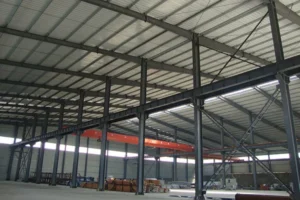
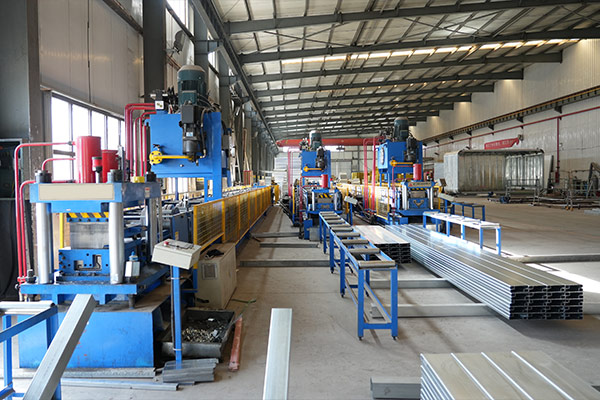
Fabrication is typically performed in controlled workshop environments equipped with CNC cutting machines, robotic welding systems, and automated drilling lines. This ensures dimensional accuracy and repeatability.
Key advantages include:
- Controlled temperature and humidity conditions
- Reduced human error through automation
- High consistency across mass production
- Efficient material utilization rates (typically 92–97%)
Engineering Precision Standards
Fabrication must comply with international standards such as:
- AISC (American Institute of Steel Construction) standards
- EN 1090 (European Execution Standard for Steel Structures)
- ISO 3834 (Welding Quality Requirements)
These standards ensure that every beam, column, and connection point meets structural safety requirements before reaching the site.
Understanding Installation in Structural Steel Systems
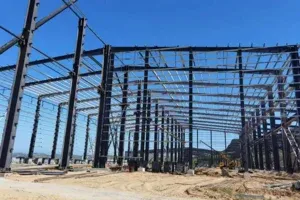
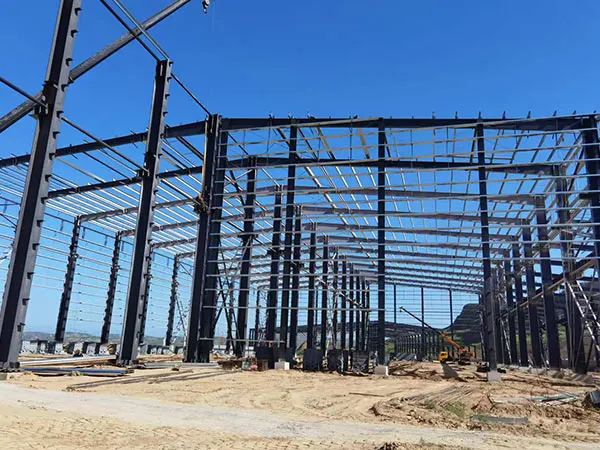
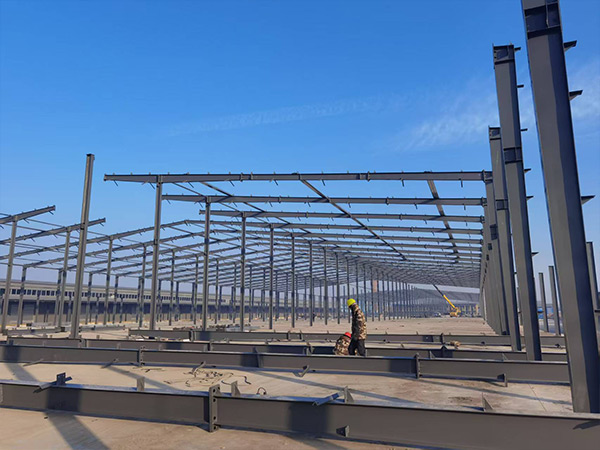
Installation is the field execution phase where fabricated steel components are assembled into a structural framework.
On-Site Assembly Dynamics
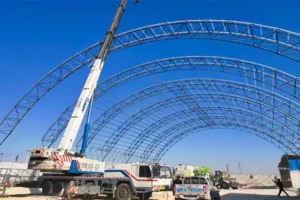
Installation requires cranes, scaffolding systems, alignment tools, and skilled rigging teams. Unlike fabrication, installation is highly dependent on environmental conditions.
Key operational factors include:
- Wind load limitations during lifting operations
- Foundation alignment accuracy (±3 mm tolerance in many projects)
- Safety zoning and lifting sequence planning
- Real-time structural adjustments
Field Engineering Constraints
Unlike fabrication, installation must adapt to:
- Uneven terrain conditions
- Weather disruptions
- Logistical constraints
- On-site safety regulations
Fabrication vs Installation of Structural Steel: Technical Comparison
Engineering Performance Comparison Table
| Parameter | Fabrication Stage | Installation Stage |
|---|---|---|
| Dimensional Tolerance | ±1–2 mm (shop-controlled) | ±3–5 mm (site-adjusted) |
| Productivity Rate | 90–95% efficiency | 60–85% efficiency |
| Environmental Control | Fully controlled | Variable conditions |
| Inspection Frequency | Batch-based QA/QC | Continuous field inspection |
| Risk Exposure | Low | High |
| Cost Predictability | High | Medium to Low |
This comparison highlights how fabrication vs installation of structural steel directly influences project certainty and execution risk.
Structural Steel Fabrication vs Installation Workflow Breakdown
Fabrication Workflow (Step-by-Step)
Step 1: Engineering Detailing
3D modeling using BIM (Building Information Modeling) ensures clash detection and accurate steel detailing before production begins.
Step 2: Material Preparation
Steel grades such as ASTM A36, Q235, or S355 are selected based on load requirements.
Step 3: Cutting and Shaping
CNC plasma cutting and laser cutting systems ensure high accuracy with minimal material waste.
Step 4: Welding and Assembly
Automated submerged arc welding (SAW) is commonly used for heavy structural members.
Step 5: Surface Protection
Galvanization or epoxy coating is applied to prevent corrosion, extending lifespan up to 25–50 years depending on environment.
Installation Workflow (Step-by-Step)
Step 1: Site Survey and Foundation Check
Laser leveling systems ensure foundation alignment before steel erection begins.
Step 2: Pre-Assembly Layout
Steel components are organized based on erection sequence planning.
Step 3: Lifting and Positioning
Cranes with capacities ranging from 50 to 600 tons are commonly used in industrial projects.
Step 4: Temporary Fixing
Bolts and clamps secure structures before final welding or tightening.
Step 5: Final Alignment and Inspection
Structural engineers verify verticality, load distribution, and connection integrity.
Industry Standards and Compliance in Fabrication vs Installation of Structural Steel
Key International Standards
- AISC 360 – Structural Steel Buildings Specification
- EN 1090-2 – Execution of Steel Structures
- ISO 9001:2015 – Quality Management Systems
- ISO 3834 – Welding Quality Requirements
Why Standards Matter
Compliance ensures:
- Structural safety under load conditions
- Long-term durability
- Legal and insurance approval
- Reduced failure risk in seismic or high-load environments
Cost Analysis: Fabrication vs Installation of Structural Steel
Cost Distribution Insights
| Cost Component | Fabrication | Installation |
|---|---|---|
| Labor Cost | 25–35% | 40–55% |
| Equipment Cost | 20–30% | 30–45% |
| Material Waste | Low (3–8%) | Medium (5–12%) |
| Delay Risk Cost | Low | High |
Economic Insight
In most construction projects, fabrication accounts for approximately 40–60% of structural steel costs, while installation accounts for 40–60% depending on site complexity.
Case Study: Industrial Warehouse Project (Global Example)
A large logistics warehouse project (approx. 25,000 m²) demonstrated the importance of optimizing fabrication vs installation of structural steel.
Project Metrics
- Fabrication accuracy: ±1.5 mm average deviation
- Installation duration: reduced by 18% through pre-fabrication planning
- Total cost savings: approximately 12%
- Rework reduction: 35% fewer field adjustments
Key Learning
Early-stage fabrication optimization significantly reduced installation complexity and improved overall structural efficiency.
Risk Management in Structural Steel Projects
Fabrication Risks
- Incorrect shop drawings
- Welding defects
- Material inconsistencies
Installation Risks
- Crane failure or lifting accidents
- Weather-related delays
- Misalignment during assembly
Mitigation Strategies
- BIM-based coordination
- Non-destructive testing (NDT)
- Real-time installation monitoring systems
Digital Transformation in Fabrication vs Installation of Structural Steel
BIM Integration
BIM reduces clashes by up to 40% and improves coordination between fabrication and installation teams.
IoT in Construction
Sensors embedded in steel structures help monitor stress, vibration, and load distribution during installation.
Automation Trends
- Robotic welding systems
- AI-driven fabrication scheduling
- Drone-based site inspection
Sustainability Impact
Fabrication Sustainability
- Steel recycling rate exceeds 90% globally
- Waste reduction through CNC optimization
- Energy-efficient production lines
Installation Sustainability
- Reduced on-site material waste
- Modular construction reduces environmental disruption
- Faster assembly reduces carbon emissions from machinery
Common Mistakes in Fabrication vs Installation of Structural Steel
Fabrication Mistakes
- Incorrect measurement interpretation
- Poor welding quality control
- Lack of coating consistency
Installation Mistakes
- Ignoring thermal expansion gaps
- Improper bolt tightening torque
- Inaccurate crane positioning
Global Industry Trends and Insights
Recent industry reports from construction white papers highlight:
- Prefabrication adoption growing at 6–8% annually
- Modular steel structures reducing construction time by up to 30%
- Increasing demand for off-site fabrication in urban megaprojects
FAQ
What is the biggest difference between fabrication and installation?
Fabrication is manufacturing steel components in a controlled environment, while installation is assembling them on-site into a complete structure.
Which stage is more critical in structural steel projects?
Both are critical. Fabrication ensures precision, while installation ensures structural integrity in real conditions.
How does BIM improve fabrication vs installation of structural steel?
BIM improves coordination, reduces design clashes, and enhances project efficiency across both stages.
What is the typical tolerance in steel installation?
Most projects allow ±3–5 mm depending on structural requirements and standards.
Why is fabrication usually more accurate than installation?
Because it occurs in controlled environments with automated machinery and minimal external disturbances.
Conclusion
A successful construction project depends on the seamless integration of fabrication vs installation of structural steel. Fabrication ensures precision, quality, and repeatability, while installation transforms engineered components into functional structures.
When both processes are optimized through modern standards, digital tools, and proper engineering coordination, the result is a safer, faster, and more cost-efficient construction lifecycle.
Continue reading
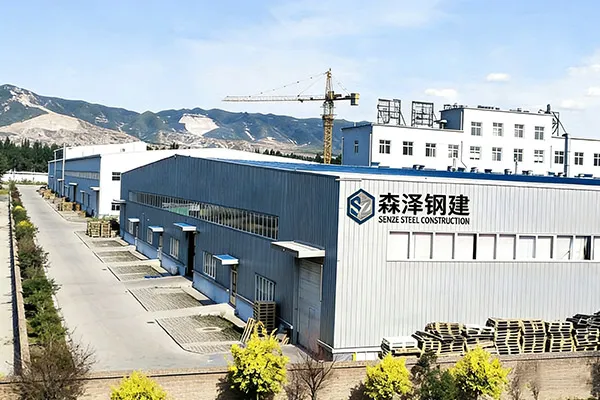
Shanxi Senze Steel Structure Technology Co., Ltd. specializes in integrated steel structure solutions, from design and manufacturing to construction. With advanced technology and strict quality control, we deliver reliable industrial and commercial steel structure projects, earning trust as a leading engineering partner.