Steel Buildings and Structures Guide 2026
Professional Steel Structure Solutions with Global Service
Welcome to our blog. We are a professional manufacturer specializing in structural steel fabrication, providing reliable solutions for industrial buildings, commercial projects, and modular construction worldwide.
👉 Follow us on Facebook for the latest updates and project insights.
👉 Contact us for fast quotations and customized structural steel solutions.
Stay tuned to our blog for more industry insights and engineering expertise.
Introduction
Global construction in 2026 is undergoing a structural transformation driven by industrial automation, sustainability mandates, and rapid urban infrastructure expansion. Among all structural systems, steel buildings and structures have emerged as the dominant solution for high-efficiency construction across industrial, commercial, logistics, and infrastructure sectors.
Recent global engineering reports and construction industry white papers consistently emphasize three core trends:
- Accelerated adoption of prefabricated steel systems
- Increased demand for large-span, column-free architecture
- Strong shift toward lifecycle-cost-driven procurement decisions
Steel is no longer just a construction material—it has become a system engineering solution that integrates design precision, manufacturing automation, and rapid assembly logic.
This extended guide provides a deep engineering, financial, and industrial analysis of steel structures, including standards, real-world applications, structural mechanics, cost modeling, and procurement frameworks.
Executive Summary: What This Extended Guide Covers
- Global adoption trends of steel buildings and structures in 2026
- Advanced structural engineering principles and load systems
- Material science, steel grades, and corrosion protection systems
- Full lifecycle cost breakdown and investment logic
- International standards and compliance frameworks
- Industrial case studies and real-world applications
- Structural comparison with concrete, timber, and hybrid systems
- Procurement strategy and engineering decision-making models
- Construction workflow from design to installation
- Risk management and long-term durability analysis
Global Market Evolution of Steel Buildings and Structures
Industrialization of Construction Systems
The construction industry is shifting from traditional on-site building methods to factory-based prefabrication systems. Steel structures play a central role in this transformation.
Key industry drivers include:
- Labor shortage in construction sectors
- Demand for faster project delivery
- Sustainability and carbon reduction targets
- Rising need for scalable industrial infrastructure
Engineering White Paper Insight: Modular Construction Growth
Recent engineering research indicates that modular steel systems significantly reduce construction timelines compared to traditional methods, especially in logistics and industrial sectors.
This is driving widespread adoption of steel buildings and structures in:
- Smart warehouses
- Automated factories
- Green industrial parks
- Large-scale logistics hubs
Advanced Structural Engineering Principles
Load Transfer System Architecture
Steel buildings rely on a hierarchical load distribution system:
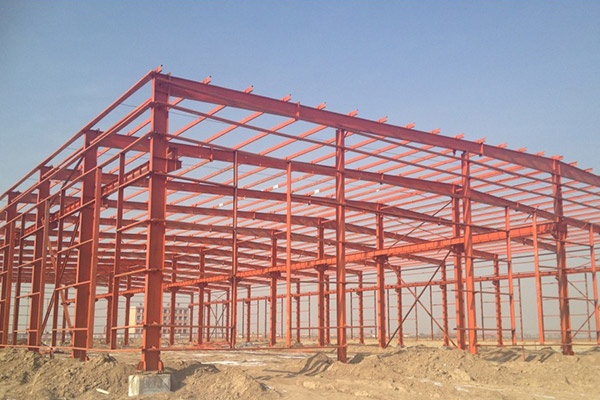
Primary Load Frame
Main beams and columns carry vertical and horizontal loads.
Secondary Support System
Purlins, girts, and bracing systems stabilize structural integrity.
Foundation Interface System
Load is transferred into concrete foundations through anchor connections.
Structural Behavior Concept
Steel structures operate on a flexible equilibrium principle, allowing controlled deformation under load without structural failure.
This differs fundamentally from rigid materials like concrete, which rely on fracture resistance rather than flexibility.
Steel Buildings and Structures Material Science Analysis
Steel Grade Classification System
| Steel Grade Type | Performance Feature | Application Area |
|---|---|---|
| Carbon Structural Steel | Standard strength | General industrial buildings |
| High-Strength Low-Alloy Steel | Enhanced durability | Heavy industrial plants |
| Weathering Steel | Corrosion resistance | Outdoor infrastructure |
| Galvanized Steel | Surface protection | Warehouses and logistics |
Corrosion Protection Systems
Hot-Dip Galvanization
Steel is coated in zinc to prevent oxidation in humid or coastal environments.
Epoxy Coating Systems
Used in industrial environments with chemical exposure risks.
Multi-Layer Protective Systems
Combines primers, intermediate coatings, and top coats for extended service life.
Steel Buildings and Structures Cost Engineering Model
Full Cost Structure Breakdown
| Cost Component | Description | Cost Influence Level |
| Raw Steel Material | Base structural material | Very High |
| Fabrication Process | Cutting, welding, assembly | High |
| Engineering Design | Structural calculation & CAD | Medium |
| Foundation System | Concrete base engineering | High |
| Installation Labor | On-site assembly | Medium |
| Logistics | Transport & handling | Medium |
| Compliance & Certification | Safety standards | Medium |
| Maintenance Planning | Lifecycle support | Low–Medium |
Cost Engineering Concept: Lifecycle vs Initial Cost
Modern procurement strategies prioritize lifecycle cost over initial investment.
Lifecycle cost includes:
- Maintenance frequency
- Structural inspection cycles
- Corrosion protection renewal
- Energy efficiency impact
Steel Buildings and Structures vs Alternative Construction Systems
Advanced Comparison Table
| Feature | Steel Structures | Concrete Structures | Timber Structures | Hybrid Systems |
| Construction Speed | Very High | Low | Medium | High |
| Structural Strength | Very High | High | Medium | High |
| Design Flexibility | Excellent | Limited | Medium | Excellent |
| Expansion Capability | Excellent | Poor | Poor | Good |
| Maintenance Cost | Low | Medium | High | Medium |
| Sustainability Index | High | Medium | High | Very High |
Engineering Interpretation
Flexibility vs Rigidity Principle
Steel systems absorb stress through elastic deformation, while concrete systems rely on compressive strength resistance.
Expansion Efficiency Model
Steel buildings allow modular expansion without full structural reconstruction.
Structural System Classification
Pre-Engineered Buildings (PEB)
Concept Overview
PEB systems are factory-designed steel structures assembled on-site.
Key advantages:
- Reduced construction time
- Lower labor dependency
- Predictable engineering performance
Space Frame Structures
Used for:
- Stadium roofs
- Exhibition centers
- Airport terminals
Feature:
- Large-span capability without internal columns
Portal Frame Structures
Common in:
- Warehouses
- Industrial workshops
- Logistics centers
Feature:
- Cost-efficient structural system
- High load-bearing capacity
International Engineering Standards and Compliance

Key Global Standards Framework
Steel buildings are commonly designed under:
- Load resistance safety codes
- Wind load engineering standards
- Seismic performance requirements
- Fire resistance regulations
Engineering Testing Requirements
Structural Load Testing
Ensures resistance to:
- Vertical loads
- Wind pressure
- Seismic movement
Material Certification Testing
Includes:
- Tensile strength tests
- Yield strength verification
- Impact resistance testing
Construction Workflow of Steel Buildings and Structures
Phase 1: Engineering Design & Modeling
Advanced BIM (Building Information Modeling) systems are used to simulate structural behavior before construction begins.
Phase 2: Factory Fabrication
Steel components are manufactured with precision CNC systems ensuring:
- Dimensional accuracy
- Structural consistency
- Quality control compliance
Phase 3: Transportation & Logistics Planning
Prefabricated modules are transported in optimized sequences to reduce site congestion.
Phase 4: On-Site Assembly
Components are installed using:
- Bolted connections
- Welded joints
- Crane-assisted lifting systems
Phase 5: Finishing & System Integration
Includes:
- Roofing system installation
- Wall panel integration
- Electrical and mechanical system embedding
Industry Case Studies
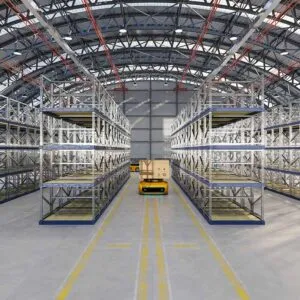
Case Study 1: Smart Industrial Warehouse Expansion
A logistics company adopts steel structures to expand storage capacity rapidly.
Key outcomes:
- Reduced construction timeline
- Increased storage efficiency
- Modular scalability achieved
Case Study 2: Manufacturing Plant Development
Heavy machinery manufacturing facilities require:
- High-load structural framing
- Crane support systems
- Vibration-resistant design
Steel systems provide ideal engineering performance.
Case Study 3: Large Exhibition Complex
A column-free design enables:
- Flexible interior layouts
- High visitor capacity
- Multi-purpose event hosting
Steel Buildings and Structures Investment Framework
ROI Evaluation Factors
- Construction speed advantage
- Operational efficiency improvement
- Maintenance cost reduction
- Expansion scalability
Risk Assessment Model
Key risks include:
- Steel price volatility
- Design complexity miscalculations
- Environmental exposure factors
- Logistics coordination challenges
Sustainability and Environmental Engineering

Carbon Efficiency Concept
Steel is highly recyclable, contributing to:
- Reduced construction waste
- Circular material lifecycle
- Lower long-term environmental impact
Energy Efficiency Integration
Modern steel buildings support:
- Solar panel integration
- Insulated wall systems
- Smart ventilation systems
FAQ
What makes steel buildings and structures different from traditional buildings?
They use a load-bearing steel frame system that allows faster construction, higher strength, and greater flexibility.
Are steel buildings and structures suitable for extreme climates?
Yes, they are engineered to resist wind, snow loads, seismic activity, and temperature variations when properly designed.
How long can steel structures last in industrial environments?
With proper corrosion protection and maintenance, they can serve long-term operational cycles in demanding environments.
What industries benefit most from steel structures?
Manufacturing, logistics, agriculture, energy, and infrastructure sectors benefit most from steel construction systems.
Are steel buildings more cost-effective over time?
Yes. While initial investment may vary, lifecycle cost is typically lower due to reduced maintenance and faster construction cycles.
What is the most important factor in steel structure design?
Load calculation accuracy and structural stability design are the most critical engineering factors.
Conclusion
In 2026, steel buildings and structures represent the core foundation of modern industrial and commercial construction systems. Their combination of structural efficiency, rapid installation, modular flexibility, and lifecycle cost advantages makes them a dominant solution across global infrastructure development.
As engineering technology advances, steel-based systems will continue to evolve toward smarter, more sustainable, and more scalable construction ecosystems—supporting the next generation of global industrial expansion.
Continue reading
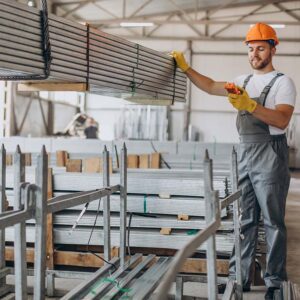
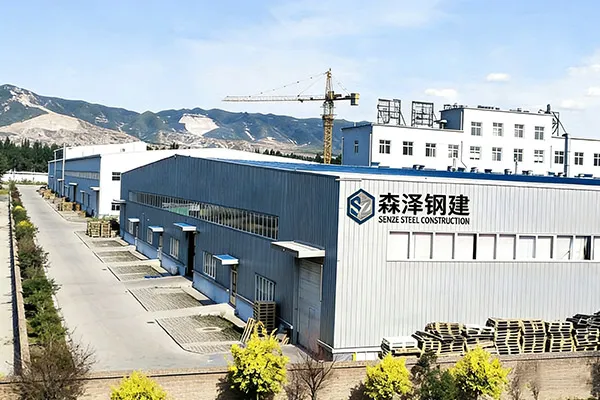
Shanxi Senze Steel Structure Technology Co., Ltd. specializes in integrated steel structure solutions, from design and manufacturing to construction. With advanced technology and strict quality control, we deliver reliable industrial and commercial steel structure projects, earning trust as a leading engineering partner.