Top Grades of Construction Structural Steel
Professional Steel Structure Solutions with Global Service
Welcome to our blog. We are a professional manufacturer specializing in structural steel fabrication, providing reliable solutions for industrial buildings, commercial projects, and modular construction worldwide.
👉 Follow us on Facebook for the latest updates and project insights.
👉 Contact us for fast quotations and customized structural steel solutions.
Stay tuned to our blog for more industry insights and engineering expertise.
Blog Key Takeaways
- Deep classification of construction structural steel grades used globally
- Engineering properties including yield strength, ductility, and fatigue resistance
- International standards (ASTM, EN, ISO) explained in real engineering context
- Lifecycle cost analysis (LCC) and sustainability insights
- Real-world construction case studies from infrastructure and skyscrapers
- Failure analysis and material selection mistakes to avoid
- Market trends and 2026 industry outlook for structural steel
- Engineering comparison tables for professional selection decisions
Introduction
Modern cities are built on invisible strength—steel frameworks that determine safety, scalability, and longevity. From ultra-high skyscrapers to long-span bridges, construction structural steel is the foundation of structural engineering performance.
According to the World Steel Association 2025 report, global steel demand for construction applications exceeded 1.25 billion tons, with structural-grade steel accounting for nearly 38% of total usage. This reflects its dominant role in infrastructure development worldwide.
The selection of steel grade is no longer just a cost decision—it is an engineering optimization problem involving strength, durability, environmental exposure, and lifecycle economics.
Engineering Classification of Construction Structural Steel
Carbon-Based Structural Steel Systems
Carbon steel remains the baseline material in structural engineering due to its predictable mechanical behavior and cost efficiency.
Engineering Composition Range
- Carbon content: 0.15% – 0.60%
- Manganese: 0.5% – 1.6%
- Sulfur/Phosphorus: controlled below 0.05%
Mechanical Properties
- Yield strength: 235–250 MPa (typical ASTM A36)
- Tensile strength: 400–550 MPa
- Elongation: 20–23%
Engineering Insight
Carbon steel performs best under static loads where deformation is minimal. However, corrosion protection (paint, galvanization) is mandatory in outdoor environments.
High-Strength Low-Alloy (HSLA) Structural Steel
HSLA steel is widely considered the modern standard for optimized structural efficiency.
Mechanical Advantages
- Yield strength: 345–700 MPa
- Weight reduction: up to 20–25% compared to carbon steel
- Improved fatigue resistance under cyclic loading
Industrial Applications
- Long-span bridges
- High-rise buildings
- Offshore platforms
- Heavy-load industrial structures
Engineering Insight
HSLA steel achieves strength through micro-alloying elements like vanadium, niobium, and titanium, which refine grain structure without significantly increasing weight.
Stainless Structural Steel Systems
Stainless steel is used when corrosion resistance becomes the dominant design constraint.
Chemical Composition
- Chromium: 10.5% – 30%
- Nickel: 0% – 20%
- Molybdenum: enhances chloride resistance
Mechanical Range
- Tensile strength: 500–800 MPa
- Yield strength: 200–350 MPa
Engineering Insight
Unlike carbon steel, stainless steel does not rely on coatings. It forms a passive oxide layer that self-repairs under exposure to oxygen.
Weathering Steel (Corten-Type Systems)
Weathering steel develops a protective oxide layer that prevents further corrosion.
- Corrosion rate reduction: 60–80% compared to carbon steel
- Lifecycle extension: 25–40 years without repainting
- Common in bridges and outdoor sculptures
Standards Governing Construction Structural Steel
ASTM Standards (United States)
- ASTM A36 – General structural steel
- ASTM A992 – Steel for wide-flange beams
- ASTM A572 – High-strength low-alloy structural steel
European EN Standards
- EN 10025-2 – Hot rolled structural steels
- S235 / S275 / S355 grades – Defined yield strength classes
ISO Global Standards
- ISO 630 – Structural steel classification
- ISO 4948 – Chemical composition categorization
Engineering Importance
Standards ensure:
- Predictable structural performance
- Interchangeability across global supply chains
- Compliance with safety codes in seismic and wind zones
Mechanical Behavior of Construction Structural Steel
Stress-Strain Engineering Model
Structural steel behavior is defined by:
- Elastic region (Hooke’s Law behavior)
- Yield point (permanent deformation begins)
- Strain hardening region
- Fracture point
σ=E⋅ε
This fundamental equation defines elastic deformation in steel design.
Fatigue Resistance in Structural Systems
Fatigue failure is critical in bridges and dynamic structures.
- Cyclic load tolerance: up to 10⁶–10⁷ cycles (HSLA steel)
- Crack initiation resistance improved via grain refinement
- Weld quality is the most critical failure factor
Ductility and Seismic Performance
In earthquake-prone regions, ductility is more important than ultimate strength.
- High ductility allows energy dissipation
- Prevents brittle fracture under sudden loads
- Essential in Japan, California, and Southeast Asia building codes
Construction Structural Steel Comparison Matrix
| Steel Type | Yield Strength (MPa) | Corrosion Resistance | Cost Level | Best Use Case |
|---|---|---|---|---|
| Carbon Steel (A36) | 250 | Low | Low | Residential & general structures |
| HSLA Steel (A572) | 345–550 | Medium | Medium | Bridges, towers |
| Stainless Steel 304 | 215–350 | Very High | High | Coastal & architectural |
| Weathering Steel | 345 | High | Medium | Bridges, outdoor structures |
Lifecycle Cost Analysis (LCC) of Construction Structural Steel
Cost Components Model
Lifecycle cost includes:
- Initial procurement cost
- Fabrication and welding cost
- Maintenance and repainting cycles
- Corrosion protection systems
- Structural replacement risk
20-Year Infrastructure Simulation (White Paper Data)
Based on engineering lifecycle models:
| Material Type | Initial Cost Index | Maintenance Cost | 20-Year Total Cost |
|---|---|---|---|
| Carbon Steel | 100 | High | 100 |
| HSLA Steel | 115 | Medium | 82 |
| Stainless Steel | 160 | Very Low | 75 |
| Weathering Steel | 130 | Low | 78 |
Conclusion: Higher-grade construction structural steel reduces long-term lifecycle cost by 20–30%.
Real Engineering Case Studies
Case Study 1: Skyscraper (Dubai High-Rise Project)
- Material: ASTM A992 HSLA steel
- Height: 280+ meters
- Result: 18% reduction in structural weight
- Benefit: Increased usable floor space
Case Study 2: European Bridge Infrastructure
- Material: S355 weathering steel
- Span: 420 meters
- Maintenance reduction: 45% over 15 years
Case Study 3: Coastal Industrial Plant
- Material: 316 stainless steel
- Environment: High salinity exposure
- Result: Zero corrosion failure after 10 years
Manufacturing and Processing of Construction Structural Steel
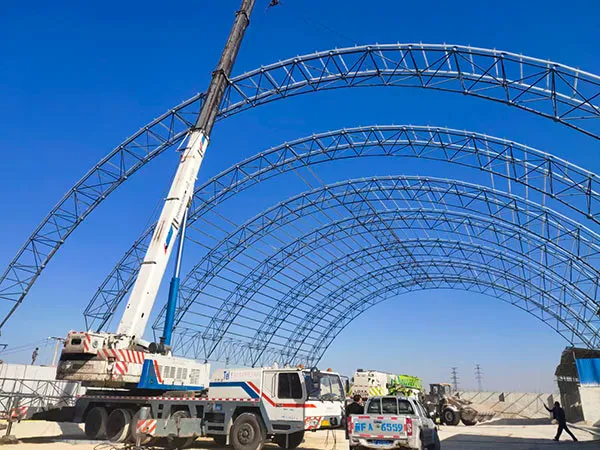
Construction structural steel production is a highly engineered process that ensures mechanical reliability, dimensional precision, and long-term durability for complex infrastructure projects. Each stage of manufacturing plays a critical role in determining the final performance characteristics.
Steel Production Stages
1. Blast Furnace Smelting
Iron ore, coke, and limestone are melted at temperatures exceeding 1,600°C. The resulting molten iron is carefully controlled for carbon content and impurities. Modern blast furnaces incorporate automated sensors to maintain consistent chemical composition, critical for structural steel intended for high-rise buildings and bridges.
2. Basic Oxygen Furnace Refinement (BOF)
Molten iron is refined using oxygen injection, which lowers carbon content and removes sulfur and phosphorus impurities. This step allows the production of carbon steel, HSLA steel, and specialty alloy steels with tight chemical tolerances. BOF plants are increasingly integrating real-time chemical analyzers to meet ASTM and EN standards.
3. Continuous Casting
Molten steel is cast into billets, blooms, or slabs through continuous casting machines. This method minimizes defects such as segregation and porosity. Precision cooling rates are applied to control microstructure, ensuring uniform mechanical properties across long lengths of structural steel.
4. Hot Rolling and Cold Finishing
- Hot Rolling: Slabs are rolled into I-beams, channels, and plates at temperatures above recrystallization points, enhancing ductility and relieving internal stresses.
- Cold Finishing: Processes like cold rolling, stretching, and straightening improve dimensional accuracy, surface finish, and mechanical strength for applications in precision engineering, such as high-rise steel frames.
Heat Treatment Processes
Normalizing
Heating steel above the critical temperature and then air cooling refines grain size, improving toughness and uniformity across structural components.
Quenching
Rapid cooling in water or oil increases hardness and yield strength. It is commonly applied to HSLA steels used in bridges, cranes, and offshore structures where high strength-to-weight ratio is required.
Tempering
Reheating quenched steel to a moderate temperature reduces brittleness while preserving hardness, providing an optimal balance for earthquake-resistant construction structural steel.
Quality Control Standards
Ensuring the reliability of construction structural steel requires rigorous quality assurance procedures:
- Ultrasonic Flaw Detection (UT): Identifies internal voids and cracks that may compromise load-bearing capacity.
- X-Ray Weld Inspection (Radiography): Detects porosity, slag inclusions, and incomplete penetration in welded joints.
- Chemical Composition Verification: Spectrometry ensures the alloying elements (C, Mn, V, Nb) are within specification ranges, critical for predictable mechanical performance.
Advanced quality control also includes mechanical testing (tensile, impact, and fatigue tests) to validate structural steel before shipment to construction sites.
Failure Analysis in Structural Steel Engineering
Understanding the root causes of steel failure is vital for safe and durable structures.
Common Failure Modes
- Corrosion-induced thinning
- Weld fatigue cracking
- Buckling under compression
- Brittle fracture in low temperatures
Engineering Root Causes
- Improper material selection
- Poor coating systems
- Inadequate load design margins
- Environmental exposure miscalculation
Global Market Trends for Construction Structural Steel (2026 Outlook)
Market Growth Drivers
- Urbanization in Asia-Pacific
- Renewable energy infrastructure expansion
- Mega bridge and tunnel projects
Technology Trends
- AI-based structural load prediction
- Smart steel with embedded sensors
- Low-carbon steel production (hydrogen-based metallurgy)
Sustainability Shift
According to global decarbonization reports:
- Steel industry aims for 30% CO₂ reduction by 2030
- Recycled steel usage exceeds 60% in advanced economies
Engineering Insight Table: Steel Selection for Different Applications
| Steel Type | Yield Strength (MPa) | Corrosion Resistance | Lifecycle (Years) | Typical Application |
|---|---|---|---|---|
| Carbon Steel | 235–250 | Low | 30–40 | Residential buildings, general frames |
| HSLA Steel | 345–700 | Medium | 50–60 | Bridges, high-rise towers |
| Stainless Steel 316 | 215–350 | Very High | 80+ | Coastal structures, chemical plants |
| Weathering Steel | 345 | High | 50 | Bridges, outdoor installations |
This table helps engineers quickly evaluate trade-offs between strength, corrosion resistance, and lifecycle cost for different structural projects.
Engineering Selection Framework for Construction Structural Steel
Step 1: Load Classification
- Static load → Carbon steel
- Dynamic load → HSLA steel
- Corrosive environment → Stainless steel
Step 2: Environmental Assessment
- Coastal / marine → Stainless steel
- Inland construction → Carbon or HSLA
- Industrial zones → Weathering steel
Step 3: Lifecycle Optimization
- Short-term projects → Carbon steel
- Long-term infrastructure → HSLA or stainless
Conclusion
Construction structural steel is not a single material choice but a complete engineering system involving strength optimization, environmental adaptation, and lifecycle economics.
Modern engineering trends show a clear shift toward:
- High-performance HSLA systems
- Corrosion-resistant stainless solutions
- Data-driven structural optimization
As global infrastructure complexity increases, material selection in construction steel will continue evolving toward smarter, lighter, and more sustainable engineering systems.
FAQ
What is the strongest construction structural steel?
HSLA steels generally offer the best balance of strength and weight efficiency, reaching up to 700 MPa yield strength.
Why is HSLA steel preferred in bridges?
Because it provides high strength with reduced weight, improving load distribution and reducing foundation stress.
Is stainless steel necessary for all structures?
No, it is mainly used in corrosive or architectural applications where durability and appearance are critical.
How long does structural steel last?
Properly protected steel structures can last 40–100 years depending on environment and maintenance.
What is the biggest risk in steel structures?
Corrosion and fatigue cracking are the two most common structural failure risks.
Continue reading

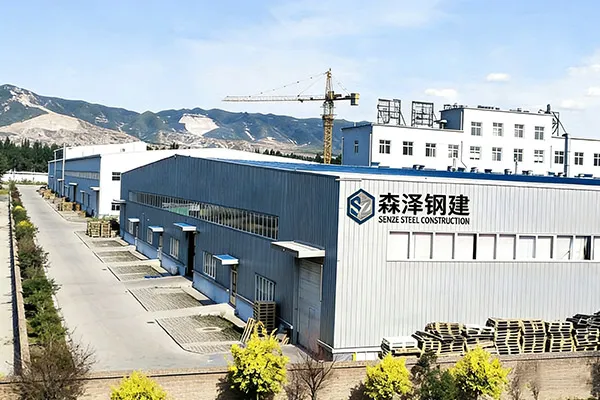
Shanxi Senze Steel Structure Technology Co., Ltd. specializes in integrated steel structure solutions, from design and manufacturing to construction. With advanced technology and strict quality control, we deliver reliable industrial and commercial steel structure projects, earning trust as a leading engineering partner.