Top Types of Steel Structure Guide
Professional Steel Structure Solutions with Global Service
Welcome to our blog. We are a professional manufacturer specializing in structural steel fabrication, providing reliable solutions for industrial buildings, commercial projects, and modular construction worldwide.
👉 Follow us on Facebook for the latest updates and project insights.
👉 Contact us for fast quotations and customized structural steel solutions.
Stay tuned to our blog for more industry insights and engineering expertise.
Introduction
In modern construction engineering, structural choice directly determines project safety, cost efficiency, and long-term durability. Steel systems have become the dominant framework in industrial, commercial, and infrastructure development due to their superior strength-to-weight ratio and fast construction cycle.
From high-rise buildings in global megacities to logistics warehouses supporting e-commerce supply chains, steel engineering continues to reshape the built environment. According to the World Steel Association (worldsteel) 2024 report, steel-based structural systems account for over 52% of global industrial construction output, with demand increasing steadily in Asia-Pacific and Middle Eastern markets.
dUnderstanding the types of steel structure is no longer optional for engineers or investors—it is a core decision-making factor that influences lifecycle cost, safety performance, and scalability.
Blog Overview – Key Insights
- Comprehensive breakdown of major types of steel structure used globally
- Engineering principles behind structural selection and load distribution
- Real-world applications in industrial, commercial, and infrastructure sectors
- Comparison of cost, strength, and construction speed
- International standards and compliance requirements
- Case studies from real construction projects
- Practical FAQs based on buyer and engineer search behavior
Introduction to Types of Steel Structure in Modern Engineering
Steel structures are engineered systems composed of beams, columns, trusses, and joints designed to withstand static and dynamic loads. The classification of types of steel structure depends on geometry, load behavior, fabrication method, and intended application.
Structural Role in Modern Construction
Steel frameworks serve as the skeleton of buildings, ensuring stability and transferring loads safely to the foundation. They are widely used in:
- Industrial plants
- Warehouses and logistics hubs
- Bridges and highways
- Airports and stadiums
- High-rise commercial buildings
Why Steel Dominates Global Construction
Steel is preferred due to:
- High tensile strength
- Predictable structural behavior
- Recyclability (over 90% recyclability rate globally)
- Faster installation compared to reinforced concrete
- Adaptability to modular construction systems
Engineering Classification of Types of Steel Structure
Concept of Structural Categorization
Steel structures are categorized based on load path design and spatial configuration. This classification ensures that engineers can match structural systems with environmental and operational demands.
Main Classification Factors
- Load distribution method
- Span requirement
- Construction speed
- Material efficiency
- Environmental conditions
Core Types of Steel Structure in Construction Industry
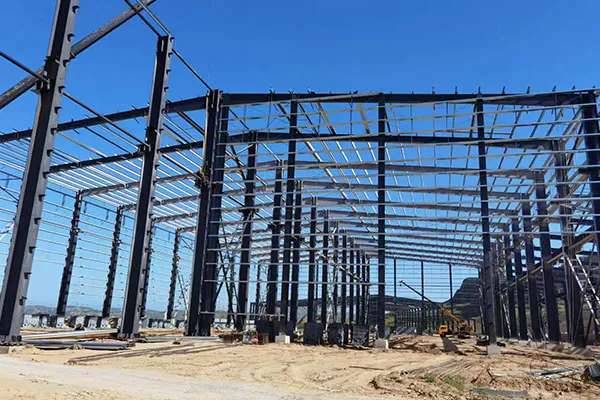
Industrial Steel Frame Structure
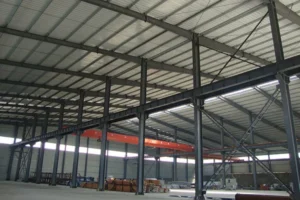
Industrial steel frames are among the most widely used systems in manufacturing and heavy industry.
Structural Characteristics
- Rigid column-beam systems
- High load-bearing capacity
- Modular expansion capability
Engineering Insight
These structures are designed for continuous operational loads, such as cranes, conveyor systems, and heavy machinery. Their rigidity ensures minimal deformation under vibration-intensive environments.
Industry Application Data
According to a 2023 industrial construction survey, more than 60% of new manufacturing facilities in China and Southeast Asia adopt steel frame systems due to cost efficiency and scalability.
Portal Frame Steel Structure
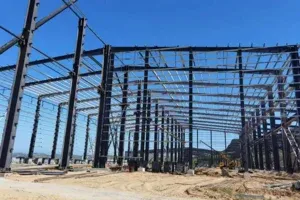
Portal frames are simple yet highly efficient structural systems widely used in low to medium-rise buildings.
Structural Behavior
Portal frames transfer loads through rigid joints between columns and rafters, forming a stable rectangular framework.
Why It Is Popular
- Low material consumption
- Fast fabrication and installation
- Reduced foundation cost
Engineering Application
- Warehouses
- Agricultural buildings
- Logistics distribution centers
Portal frame systems represent one of the most cost-efficient types of steel structure in global construction markets.
Space Frame Steel Structure
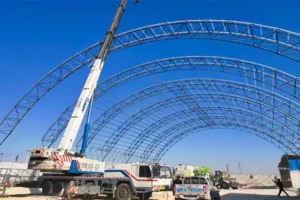
Space frames are three-dimensional structural systems designed for long-span coverage.
Structural Principle
Load is distributed across multiple directions through interconnected geometric units, typically tetrahedral or pyramidal configurations.
Key Engineering Advantage
- Eliminates internal columns
- Enables ultra-large span design (up to 200 meters or more)
- High resistance to wind and seismic loads
Real-World Application
- Airports (terminal roofs)
- Exhibition centers
- Sports stadiums
Industry Insight
A whitepaper by the International Association for Shell and Spatial Structures (IASS) highlights that space frames reduce material usage by 15–30% compared to traditional truss systems for large-span roofs.
Truss Steel Structure
Truss systems are composed of triangular units that provide excellent structural stability.
Mechanical Principle
The triangle is the most stable geometric shape, efficiently distributing tension and compression forces.
Structural Advantages
- High strength-to-weight ratio
- Efficient long-span performance
- Suitable for dynamic load conditions
Applications
- Bridges
- Roof systems
- Transmission towers
Engineering Case Study
The use of truss bridges in high-speed rail projects has improved load distribution efficiency by up to 25%, according to transportation infrastructure reports published in Europe.
High-Rise Steel Structure System
High-rise steel systems are designed for vertical urban expansion.
Structural Composition
- Steel columns
- Core shear walls
- Bracing systems
- Moment-resisting frames
Performance Requirements
- Wind load resistance
- Earthquake resilience
- Vertical load optimization
Global Trend Insight
According to CTBUH (Council on Tall Buildings and Urban Habitat), over 70% of skyscrapers above 300 meters built after 2020 use hybrid steel structures.
Comparison of Types of Steel Structure
| Type | Structural Strength | Cost Level | Construction Speed | Maintenance | Best Use |
|---|---|---|---|---|---|
| Industrial Frame | High | Medium | Fast | Low | Factories |
| Portal Frame | Medium | Low | Very Fast | Low | Warehouses |
| Space Frame | Very High | High | Medium | Medium | Airports |
| Truss System | High | Medium | Medium | Low | Bridges |
| High-Rise Frame | Very High | Very High | Slow | High | Skyscrapers |
Advanced Engineering Concepts in Steel Structures
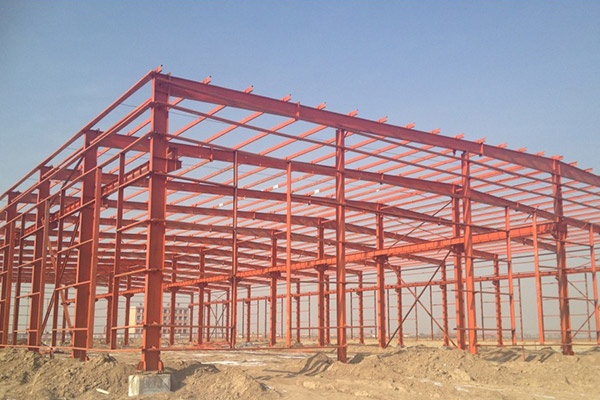
Load Transfer Mechanism
Load transfer defines how forces move from roof to foundation. Efficient systems reduce stress concentration and improve safety margins.
Structural Redundancy Principle
Redundancy ensures multiple load paths exist in case of component failure, increasing resilience in extreme conditions such as earthquakes or heavy wind loads.
Span Efficiency Ratio
Span efficiency measures how much distance a structure can cover without intermediate support. Space frames and truss systems offer the highest efficiency ratios.
International Standards Governing Types of Steel Structure
ISO Standards
- ISO 19902 – Offshore steel structures
- ISO 6707 – Building and civil engineering vocabulary
- ISO 12944 – Corrosion protection of steel structures
American Standards (AISC)
- AISC 360 – Specification for structural steel buildings
- AISC 341 – Seismic design requirements
European Standards (EN 1993 – Eurocode 3)
- Structural steel design rules
- Load and resistance factor design (LRFD) principles
Importance of Compliance
Compliance ensures:
- Structural safety
- Global project acceptance
- Reduced legal and engineering risk
- Improved lifecycle durability
Real-World Engineering Case Studies
Case Study 1 – Logistics Warehouse Expansion (China)
A large logistics company adopted portal frame steel structures for a 120,000 m² distribution center. The result:
- Construction time reduced by 35%
- Material cost reduced by 18%
- Operational efficiency improved due to flexible layout
Case Study 2 – International Airport Terminal (Middle East)
A space frame system was used for a 180-meter-span roof:
- Eliminated internal columns
- Reduced steel consumption by 22%
- Improved thermal performance through open design
Case Study 3 – Highway Bridge Project (Europe)
A truss steel system was implemented:
- Increased load capacity by 30%
- Reduced vibration impact under heavy traffic
- Extended service life beyond 75 years
Cost Analysis of Types of Steel Structure
Material Cost Factors
- Steel grade (Q235, Q355, ASTM A36)
- Fabrication complexity
- Welding and assembly requirements
Labor Cost Impact
- Portal frames: lowest labor cost
- Space frames: highest assembly complexity
- High-rise systems: highest engineering labor cost
Lifecycle Cost Perspective
Steel structures often provide lower total lifecycle costs due to:
- Reduced maintenance frequency
- Long service life (50–100 years)
- Easy modular upgrades
Sustainability and Environmental Impact
Recyclability Advantage
Steel is one of the most sustainable construction materials, with over 90% recycling rate globally.
Carbon Emission Reduction Trends
Modern steel production uses electric arc furnaces, reducing emissions by up to 60% compared to traditional blast furnace methods.
Green Building Certification Compatibility
Steel structures are widely compatible with:
- LEED certification
- BREEAM standards
- Green Building Evaluation Label (China)
Digital Transformation in Steel Structure Engineering
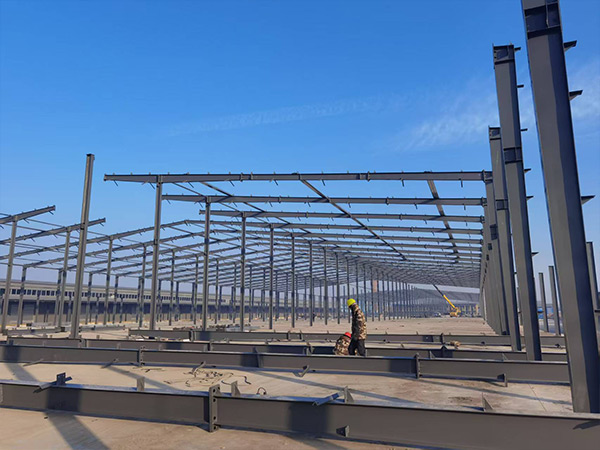
BIM Integration
Building Information Modeling (BIM) allows engineers to:
- Simulate load behavior
- Detect design conflicts
- Optimize material usage
AI-Based Structural Optimization
AI systems now assist in:
- Load prediction
- Material efficiency optimization
- Maintenance forecasting
Smart Construction Monitoring
IoT sensors embedded in steel structures enable:
- Real-time stress monitoring
- Vibration analysis
- Predictive maintenance alerts
Future Trends in Types of Steel Structure
- Modular prefabricated steel buildings
- Hybrid steel-concrete systems
- Ultra-lightweight high-strength alloys
- Automated robotic welding fabrication
- Carbon-neutral steel production technologies
Conclusion
Understanding the types of steel structure is essential for making informed engineering and investment decisions. Each system—whether portal frame, truss, space frame, industrial frame, or high-rise structure—serves a specific purpose in modern construction ecosystems.
With advancements in digital engineering, sustainable materials, and global construction standards, steel structures continue to dominate the industry due to their unmatched balance of strength, efficiency, and adaptability.
Selecting the right system ensures not only structural safety but also long-term economic and operational success.
FAQ
What are the most common types of steel structure?
The most common include portal frames, industrial frames, truss systems, space frames, and high-rise steel systems.
Which steel structure is most cost-effective?
Portal frame structures are generally the most cost-effective due to simple design and low material usage.
What is the strongest type of steel structure?
Space frame and high-rise steel structures provide the highest strength and load resistance.
How long do steel structures last?
With proper maintenance, steel structures can last 50–100 years or more depending on environmental conditions.
Are steel structures better than concrete?
Steel structures offer faster construction, better flexibility, and superior seismic performance, while concrete provides higher mass stability.
Continue reading

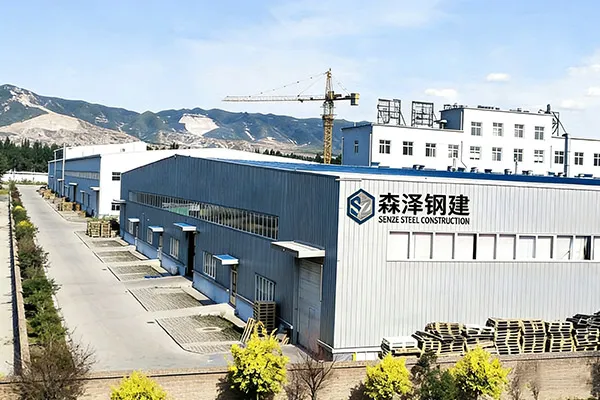
Shanxi Senze Steel Structure Technology Co., Ltd. specializes in integrated steel structure solutions, from design and manufacturing to construction. With advanced technology and strict quality control, we deliver reliable industrial and commercial steel structure projects, earning trust as a leading engineering partner.