Mua thành viên thép H-Beam: Hướng dẫn mua sắm thực tế
Giải pháp kết cấu thép chuyên nghiệp với dịch vụ toàn cầu
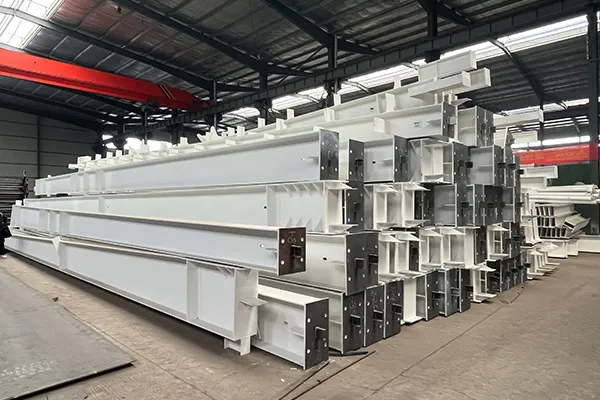
Chào mừng bạn đến với blog của chúng tôi. chúng tôi là một nhà sản xuất chuyên nghiệp chuyên chế tạo thép kết cấu, cung cấp các giải pháp đáng tin cậy cho các tòa nhà công nghiệp, dự án thương mại, và xây dựng mô-đun trên toàn thế giới.
👉 Theo dõi chúng tôi trên Facebook để biết thông tin cập nhật mới nhất và hiểu biết sâu sắc về dự án.
👉 Liên hệ với chúng tôi cho báo giá nhanh và giải pháp thép kết cấu tùy chỉnh.
Hãy theo dõi blog của chúng tôi để biết thêm thông tin chi tiết về ngành và chuyên môn kỹ thuật.
Buying structural steel involves much more than comparing the price per ton. Buyers must confirm the structural design, steel grade, dimensional tolerances, fabrication scope, quality documents, surface protection and delivery conditions before placing an order.
Key takeaways from this guide:
- Select H-beam dimensions according to engineered loads, spans and connection details.
- Confirm whether the project requires hot-rolled or welded members.
- Include the steel grade, applicable standard and tolerances in the RFQ.
- Compare total delivered cost instead of looking only at the material price.
- Request mill certificates, inspection records and fabrication drawings.
- Evaluate the supplier’s fabrication capability, traceability and export experience.
- Final member selection must be reviewed by a qualified structural engineer.
What Are H-Beam Steel Members?
Thành viên thép H-Beam are structural sections with two parallel flanges connected by a central web. Viewed from the end, their profile resembles the letter “H.” This geometry provides an efficient combination of bending resistance, axial load capacity and structural stability.
They are commonly used as columns, beams and load-bearing frame components in factories, warehouses, bridges, commercial buildings and other steel structures. Buyers can explore Senze’s Thành viên thép H-Beam for structural projects requiring customized dimensions and fabrication.
Understanding the Basic H-Beam Profile
Flanges
The flanges are the horizontal parts at the top and bottom of the section. They resist much of the bending stress and help distribute loads through the structural frame.
Web
The web is the vertical plate connecting the two flanges. It mainly transfers shear forces and helps maintain the overall shape of the member.
Root and Fillet
The root is the area where the web meets the flange, while the fillet is the curved transition found in many hot-rolled profiles. These details can affect connection clearance, fabrication and the placement of bolts or stiffeners.
Why Are H-Beam Steel Members Used in Construction?
An H-shaped cross-section places material where it can contribute efficiently to strength and stiffness. This makes it suitable for structures that need to carry substantial loads without relying on excessively heavy solid sections.
According to the Hiệp hội thép thế giới, steel is a major engineering and construction material and can be recycled repeatedly without losing its inherent properties. Its strength, adaptability and established supply chain make it suitable for projects ranging from industrial buildings to transport infrastructure.
High Load-Bearing Capacity
The wide flanges allow the section to resist bending effectively. Depending on the structural design, H-beams can be used horizontally as beams or vertically as columns.
Efficient Strength-to-Weight Performance
A properly selected section can provide the required strength while controlling structural weight. However, choosing a larger beam without calculation may increase material, transport and lifting costs without improving the project economically.
Fabrication Flexibility
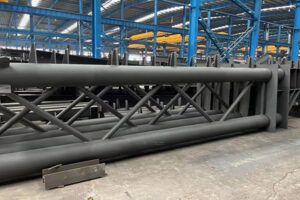
H-Beam Steel Members can be cut, drilled, welded and assembled with plates, stiffeners and connection components. This flexibility supports both standard framing layouts and customized steel structures.
Hot-Rolled vs Welded H-Beam Steel Members
One of the first purchasing decisions is whether to order hot-rolled sections or welded members. The right option depends on the required size, quantity, engineering specification and fabrication complexity.
| Comparison factor | Hot-rolled H-beam | Welded H-beam |
|---|---|---|
| Production method | Rolled as one section in a steel mill | Fabricated by welding flange and web plates |
| Size availability | Limited to mill section ranges | Highly customizable |
| Typical application | Standard building frames and repetitive structures | Heavy loads, large spans and special designs |
| Dimensional flexibility | Relatively low | Cao |
| Fabrication requirements | Usually less initial fabrication | Welding and distortion control are important |
| Cost suitability | Often economical for standard sizes | Practical when non-standard sizes are required |
| Quality focus | Rolling tolerances and material grade | Plate quality, welding procedure and dimensional accuracy |
When Should You Buy Hot-Rolled Sections?
Hot-rolled sections are generally suitable when the engineering drawings specify a widely available standard profile. They can reduce fabrication time and simplify replacement or additional procurement.
When Is a Welded H-Beam More Practical?
Welded members are useful when a project requires unusual depths, flange widths or plate thicknesses. They may also be selected for heavy industrial structures where standard rolled sections cannot provide the required geometry.
Important Welding Consideration
For welded members, ask the supplier how welding procedures, welder qualifications, distortion and weld inspection are controlled. The purchase specification should identify any required visual, ultrasonic or magnetic-particle testing instead of leaving inspection expectations undefined.
H-Beam vs I-Beam: Which One Should a Buyer Choose?
The terms “H-beam” and “I-beam” are sometimes used loosely, but buyers should not rely on the name alone. The actual section dimensions and structural properties determine whether a member is suitable.
| Tính năng | H-beam | I-beam |
|---|---|---|
| Flange shape | Typically wide and relatively parallel | Often narrower; some profiles have tapered flanges |
| Cross-section proportions | Wider, more balanced profile | Usually deeper and narrower |
| Common use | Columns, beams and heavy frames | Beams and lighter framing applications |
| Lateral stability | Wide flanges may provide better stability in some designs | May require additional restraint depending on the design |
| Selection basis | Loads, spans and connection design | Loads, spans and connection design |
Neither profile is automatically better. The structural engineer must assess bending, shear, axial loading, buckling, deflection, connections and fire or seismic requirements before approving a section.
How to Specify H-Beam Steel Members in an RFQ
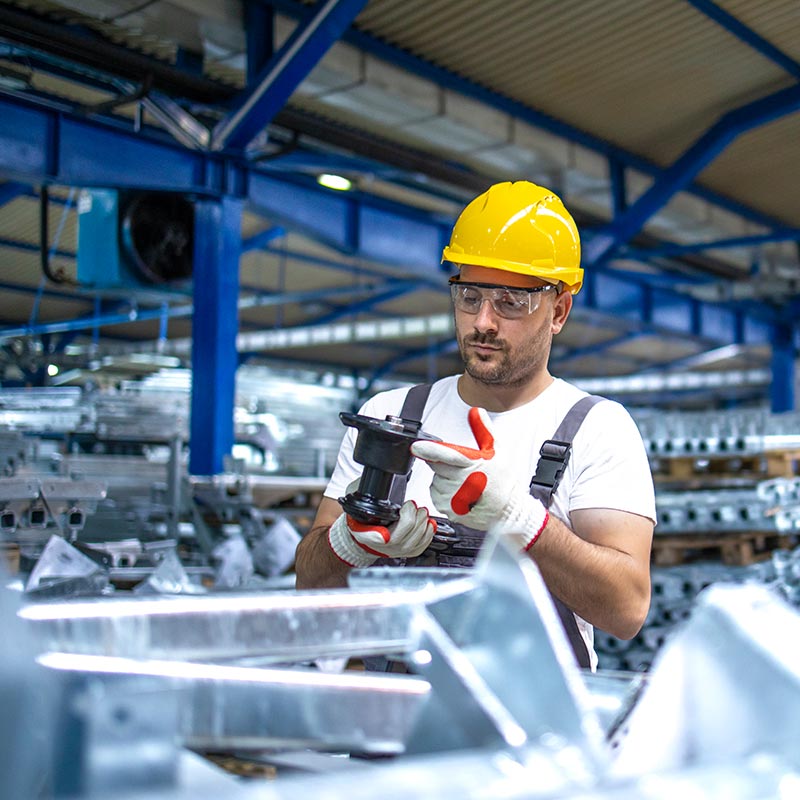
A vague request such as “send your best price for H-beams” rarely produces a reliable quotation. Suppliers may assume different grades, standards, lengths or fabrication scopes, making their prices difficult to compare.
1. Section Dimensions
Provide the section designation or all essential dimensions:
- Overall depth
- Flange width
- Web thickness
- Flange thickness
- Required length
- Unit weight, if specified
- Quantity for each section
Why Dimensions Matter
Two beams with similar overall depth may have significantly different thicknesses, weights and load capacities. Never approve a substitute solely because its external dimensions appear similar.
2. Steel Grade and Standard
State the required steel grade together with the governing standard. Common project specifications may reference ASTM, EN, JIS, GB or other national and regional systems.
For example, ASTM A992/A992M covers structural steel shapes used in building framing, bridges and general structural applications. ASTM also notes that supplementary testing or restrictions apply when they are specifically included in the purchase order.
Do not treat similarly named grades from different standards as automatically interchangeable. Any proposed substitution should be reviewed against mechanical properties, chemical composition, weldability, impact requirements and local design regulations.
3. Fabrication Scope
Clarify whether the supplier is providing raw lengths or finished structural components. A fabricated order may include:
- Cutting to length
- Bolt-hole drilling
- End-plate welding
- Base plates or cap plates
- Stiffeners and connection plates
- Cambering
- Member marks
- Trial assembly
- Surface preparation and coating
Senze also provides custom steel fabrication for projects that require processed structural components rather than unmodified steel sections.
4. Dimensional Tolerances
Your RFQ should define the applicable tolerance standard for section dimensions, straightness, length and fabrication. Tight tolerances can increase production and inspection costs, so they should reflect actual installation and connection needs.
5. Surface Treatment
The correct surface treatment depends on the environment, expected service life and maintenance plan.
Shop Primer
A shop primer offers temporary or system-specific protection during fabrication, transport and erection. Specify the coating type, dry-film thickness and areas that must remain uncoated for welding or connections.
Hot-Dip Galvanizing
Galvanizing may be considered for humid, outdoor or corrosive environments. Buyers should account for vent and drain holes, member size limitations, coating repair and possible distortion.
Blast Cleaning and Protective Coating
Multi-layer coating systems may be required for industrial or marine environments. State the surface preparation grade, coating system, color and total dry-film thickness in the procurement documents.
What Quality Documents Should Buyers Request?
Documentation connects the delivered material to the technical requirements in the purchase order. The exact document package should be agreed upon before manufacturing begins.
Mill Test Certificate
A mill test certificate normally reports the heat number, steel grade, chemical composition and mechanical test results. Check that the certificate can be traced to the markings on the delivered material.
Dimensional Inspection Report
This report records critical measurements such as depth, flange width, thickness, length and straightness. For fabricated pieces, it may also include hole locations, end-plate alignment and assembly dimensions.
Welding Records
When purchasing welded H-Beam Steel Members, project requirements may call for welding procedure specifications, procedure qualification records, welder qualifications and nondestructive examination reports.
Coating Inspection Report
For painted or galvanized components, ask for relevant records covering surface preparation, coating thickness, adhesion or repair, as required by the project specification.
Traceability
Traceability means that a finished structural member can be linked to its material certificate, fabrication record and inspection status. Clear heat numbers and piece marks reduce confusion during receiving and erection.
How Can You Evaluate an H-Beam Supplier?

A low quotation does not necessarily represent the lowest project cost. Poor dimensional control, missing documents or late delivery can create expensive delays at the construction site.
Manufacturing and Fabrication Capability
Ask which operations are performed in-house and which are subcontracted. Review the supplier’s equipment for cutting, drilling, assembly, welding, blasting, painting and dimensional inspection.
Quality Control Process
A capable supplier should be able to explain how incoming material, fabrication, welding, dimensions and coatings are inspected. Senze’s overview of quality control in steel structure manufacturing provides additional points buyers can use when assessing a production process.
Relevant Project Experience
Look for experience with projects that have comparable member sizes, fabrication complexity and destination requirements. Senze’s steel structure project cases show applications across industrial buildings and structural engineering projects.
Engineering Coordination
Suppliers should identify inconsistencies in drawings, connection details or bills of materials before production. However, fabrication support does not replace the responsibilities of the project’s licensed structural engineer.
Export and Packaging Experience
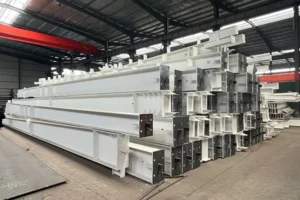
For international procurement, evaluate the supplier’s ability to manage piece marking, packing lists, container planning, moisture protection and export documentation. Poor packaging can damage coatings and make unloading or member identification difficult.
How Do You Compare H-Beam Steel Quotations?
Compare quotations on an equal technical and commercial basis. If the scope differs, a lower price may simply exclude work that another supplier has included.
Build a Bid Comparison Sheet
Your comparison should cover:
- Steel grade and standard
- Section size and theoretical or actual weight
- Raw material or fabricated-member scope
- Cutting, drilling and welding
- Surface treatment
- Inspection and documentation
- Packing and loading
- Incoterms
- Lead time
- Payment terms
- Quotation validity
- Exclusions and optional charges
Price per Ton vs Total Delivered Cost
Price per ton is useful only when material grade, dimensions and scope are identical. For finished H-Beam Steel Members, the more useful figure is often the total delivered cost per approved component or per complete structural package.
Possible Hidden Costs
Check whether the quotation excludes testing, coating, packing frames, inland transport, port charges, freight, customs clearance or site unloading. These items can materially change the final procurement cost.
A Practical Pre-Order Checklist
Before signing the purchase contract, confirm the following:
- Approved structural drawings and member schedule are available.
- Section dimensions, grade and standard are stated clearly.
- Rolled or welded construction is identified.
- Connection plates, holes, stiffeners and welds are defined.
- Tolerances and inspection requirements are agreed upon.
- Surface preparation and coating specifications are complete.
- Required certificates and reports are listed.
- Piece-marking and traceability methods are confirmed.
- Packing, shipping terms and delivery destination are clear.
- Design changes require written approval.
- Final specifications have been reviewed by the responsible engineer.
For projects that include purlins, braces and other supporting components, coordinate the primary frame with the required secondary steel members before approving fabrication drawings.
Final Thoughts
Buying Thành viên thép H-Beam successfully requires alignment between engineering requirements, manufacturing capability and commercial terms. The most reliable purchasing process begins with complete drawings and specifications, followed by an equal-scope quotation comparison and a clearly defined inspection plan.
Senze integrates structural design, manufacturing and installation for industrial buildings, bridges and large-span projects. Buyers who require customized members or a complete structural package can learn more about Senze’s structural steel fabrication capabilities or contact the team with drawings, quantities and project requirements for a detailed quotation.
Câu hỏi thường gặp
How do I know what size H-beam I need for my building?
The size must be calculated from the span, loading, support conditions, deflection limits, connection design and applicable building code. A supplier can manufacture to approved drawings, but a qualified structural engineer should determine or verify the final section.
Can a supplier replace my specified H-beam with a similar size?
Only after an engineering review. Similar depth or weight does not guarantee equivalent section properties, steel strength, stability or connection compatibility.
Are heavier H-Beam Steel Members always stronger?
A heavier section may offer greater capacity, but weight alone is not enough to judge performance. The distribution of material, section properties, steel grade, unbraced length and load direction must also be considered.
Should I buy standard lengths or request cut-to-size beams?
Standard lengths may be economical when local fabrication is available. Cut-to-size members can reduce site work and scrap, but buyers must provide accurate drawings and account for fabrication tolerances.
What should I send a manufacturer to get an accurate quote?
Send structural drawings, a bill of materials, section dimensions, steel grades, lengths, quantities, connection details, coating requirements, inspection requirements, destination and requested Incoterm. Clearly state whether you need raw sections or fully fabricated members.
How can I verify the steel grade after delivery?
Check the material markings and heat numbers against the mill test certificates. If the contract requires independent verification, arrange appropriate chemical or mechanical testing through an approved inspection organization.
How long does an H-beam order usually take?
Lead time depends on material availability, total tonnage, fabrication complexity, coating, inspection and shipping method. Ask the supplier to separate material procurement, fabrication, inspection and transport time in the production schedule.
Can H-beams be used for both columns and roof beams?
Yes, they can serve as columns or beams when the structural design supports that application. The connection method, bracing system and load conditions will differ between the two uses.
Is it cheaper to buy raw beams and fabricate them locally?
It can be, especially when local fabrication capacity and transport conditions are favorable. Compare material, labor, scrap, coating, inspection, freight and site coordination rather than comparing steel prices alone.
Đọc tiếp

Sơn Tây Senze Kết cấu thép Công nghệ Công ty TNHH. chuyên về các giải pháp kết cấu thép tích hợp, từ thiết kế và sản xuất đến xây dựng.Với công nghệ tiên tiến và kiểm soát chất lượng nghiêm ngặt, chúng tôi cung cấp các dự án kết cấu thép công nghiệp và thương mại đáng tin cậy, kiếm được sự tin tưởng như một đối tác kỹ thuật hàng đầu.